Global Trade Shifts & Rate Hold: 5 Smart Car Buys July 2026
India's domestic auto boom is outrunning global supply chain turbulence — but only if you know which cars sit on the right side of the trade divide.
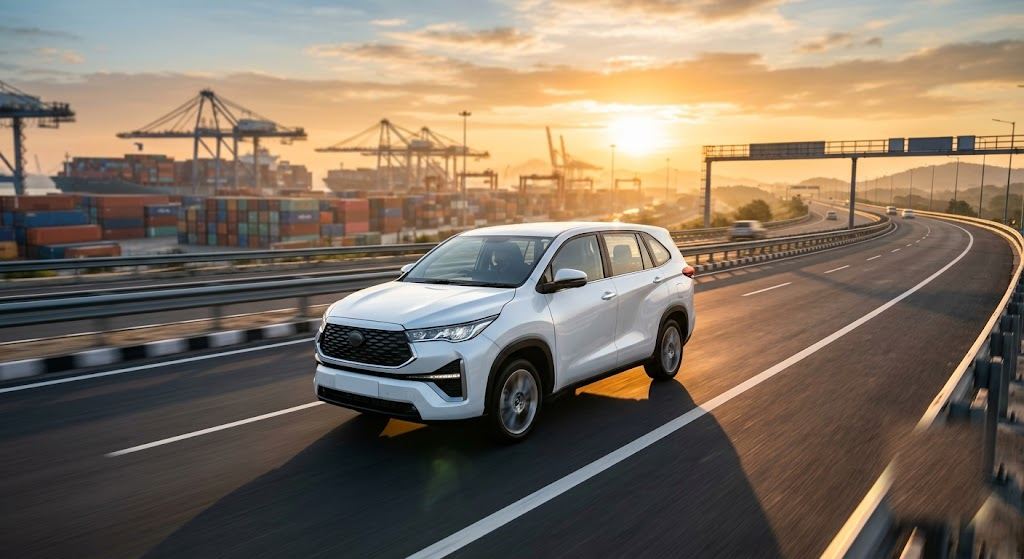
India's economy is sending a quietly confident signal at the start of July 2026. GST collections have risen alongside passenger vehicle sales, confirming that domestic consumption is holding up even as multiple global fault lines activate simultaneously: the Strait of Hormuz briefly choked oil flows in late June before an interim US-Iran peace understanding eased the situation, UK automotive supply chains are flagging serious policy uncertainty from evolving trade arrangements, and the broader trade war narrative continues to redraw manufacturing geography worldwide. The notable counterpoint is that India is increasingly appearing on the winning side of these shifts. The new economic corridors connecting India to the Gulf and onward into Europe are gaining real traction as global firms reconfigure supply chains away from older, riskier routes — and Indian auto manufacturing, anchored in cities like Pune, Chennai and Gurugram, is quietly benefiting from exactly that momentum.
On the financing side, the Reserve Bank of India has held firm in the face of considerable external pressure. Despite the oil-market noise from the Hormuz closure and some analyst calls for a rate response to import cost pass-through, Governor Sanjay Malhotra explicitly called rate hike talk premature in late June, signalling a steady-rate environment through at least Q3 2026. That matters enormously for car buyers: an auto loan of ₹10 lakh over five years at current bank rates translates to a monthly EMI of roughly ₹18,500–19,500 depending on lender and credit profile — a number that has remained broadly stable for several months and shows no near-term signal of a sharp upward move. The financing window is genuinely open right now, and buyers who act in the July–September window are working with better rate visibility than those who defer to Q4.
Where the global turbulence does land concretely on Indian buyers is at the premium import end. Cars arriving as Completely Built Units — including the [Volvo XC60](/cars/volvo-xc60) (from ₹67.9 lakh), [Mini Cooper](/cars/mini-cooper) (from ₹44.9 lakh), and [Porsche Macan](/cars/porsche-macan) (from ₹88 lakh) — carry import duties of approximately 100% before GST and registration, meaning any softening of the rupee against the dollar or disruption to European supply chains flows directly into the on-road price. UK automotive supply chains are currently navigating genuine uncertainty around post-trade-arrangement terms, which introduces real timeline and pricing risk for models sourced from British or European plants. If you are eyeing a CBU model in the ₹45–90 lakh bracket, the pragmatic move is to lock in existing dealer stock rather than waiting for fresh allocations — arriving cars may carry revised ex-works pricing that erases any advantage of waiting.
On fuel costs, the picture is nuanced but instructive. The Hormuz episode briefly pushed crude toward elevated territory before partial normalization. Indian retail petrol and diesel prices were not dramatically revised in that window, but the episode is a reminder that energy cost risk has an upward bias as long as Middle East geopolitics remain unsettled. The diesel-versus-petrol cost gap in India has also compressed meaningfully over the past two years, which has already shifted the value calculus toward high-efficiency petrols and hybrids. A car delivering 20-plus kmpl on petrol or running a parallel-hybrid system now offers meaningfully better protection against oil-price volatility than a diesel returning 16–17 kmpl real-world — particularly if crude spikes again in the second half of the year.
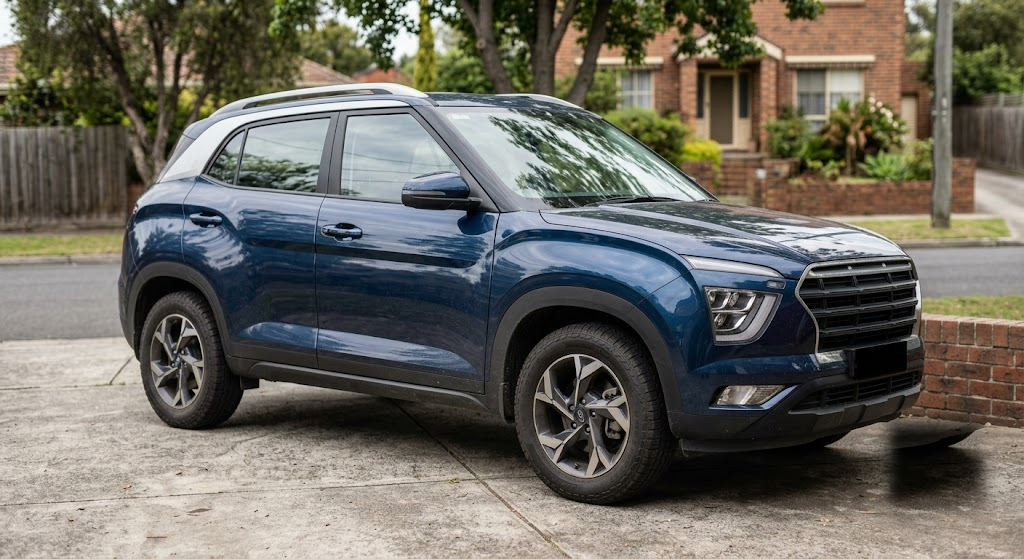
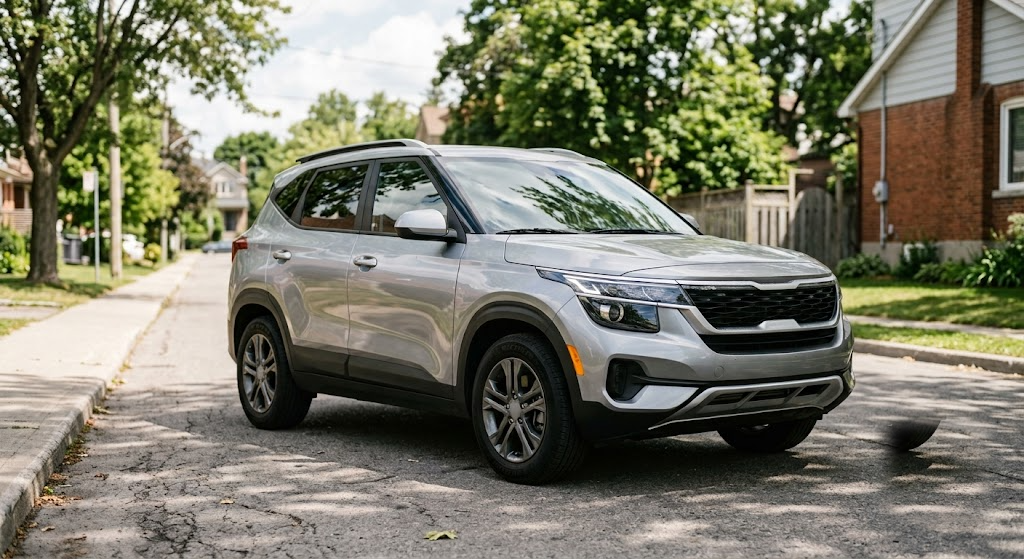
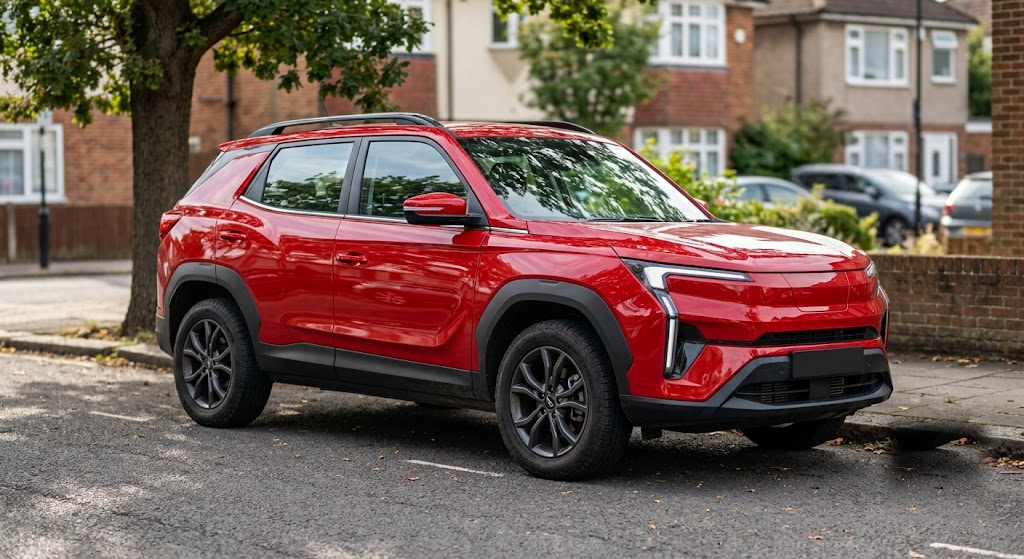
Five models line up particularly well against this macro backdrop. The [Toyota Innova Hycross](/cars/toyota-innova-hycross) (from ₹19.3 lakh, 21.1 kmpl petrol-hybrid combined) is assembled in India and pairs the domestic supply-chain advantage with a powertrain that actively benefits from higher petrol prices — the confident buy for families in the ₹20–25 lakh range. The [Hyundai Creta](/cars/hyundai-creta) (from ₹11 lakh, up to 17.4 kmpl petrol) and [Kia Seltos](/cars/kia-seltos) (from ₹10.99 lakh, up to 20.7 kmpl in diesel) are both manufactured domestically at established plants with supply chains entirely insulated from European or UK disruption — reliable, stock-available choices in the volume SUV segment. The [Honda City hybrid](/cars/honda-city) (from ₹11.9 lakh, 18.4 kmpl) pairs strong fuel economy with a sedan footprint ideal for urban buyers, and it benefits fully from today's steady financing environment. For EV-ready buyers, the [Mahindra BE 6](/cars/mahindra-be-6) (from ₹18.9 lakh, 490 km ARAI range on the 59 kWh pack) is entirely designed and manufactured in India — zero import duty exposure, zero CBU risk, and a direct structural hedge against any petrol price escalation if Hormuz tensions reignite.
The practical takeaway for July 2026 is straightforward: the strongest risk-adjusted buying window is the ₹10–25 lakh domestically assembled segment, and that window is open now. GST and auto sales data both point to a market that is strengthening, which historically precedes manufacturer price revisions and longer waiting periods. Financing costs are stable but not guaranteed to remain so as global trade disruptions work through input price chains into Q4. For buyers above ₹45 lakh considering CBU imports, the advice runs counter to intuition — act sooner, not later, and secure existing stock, because the next allocation could carry a different price tag. India's position in the evolving global trade corridor may be strengthening at the macro level, but for the individual buyer the most actionable insight is simpler: locally assembled wins on risk, hybrid and EV powertrains win on fuel cost exposure, and July is a meaningfully better month to sign on the dotted line than October.