Sri Lanka's Car Import Ban: 5 India Buying Lessons for July 2026
A neighbour's emergency import ban, a steady RBI rate, and a fragile oil corridor are delivering five clear signals to Indian car buyers this July.
On June 30, 2026, Sri Lanka announced a 50% emergency surcharge on all motor vehicle imports — a blunt instrument to protect the island nation's dwindling foreign exchange reserves amid continued global trade turbulence. The move is a sharp regional signal: when an economy's FX cushion runs thin, cars, as high-ticket discretionary imports, are among the first casualties of government intervention. India is not Sri Lanka, but the macro forces behind that decision are not absent here either. The RBI's Monetary Policy Committee met on June 28 and held the repo rate steady at 5.25%, a prudent call, while simultaneously trimming its FY27 GDP growth forecast to 6.6% and nudging its inflation projection up to 5.1%. Layered on top of this is the Strait of Hormuz crisis of mid-June 2026, which briefly rattled crude oil markets and underscored how quickly fuel-cost assumptions can unravel. Together, these three developments — a regional import shock, a cautious central bank, and an unstable energy corridor — define the buying environment for Indian car buyers entering the second half of FY27.
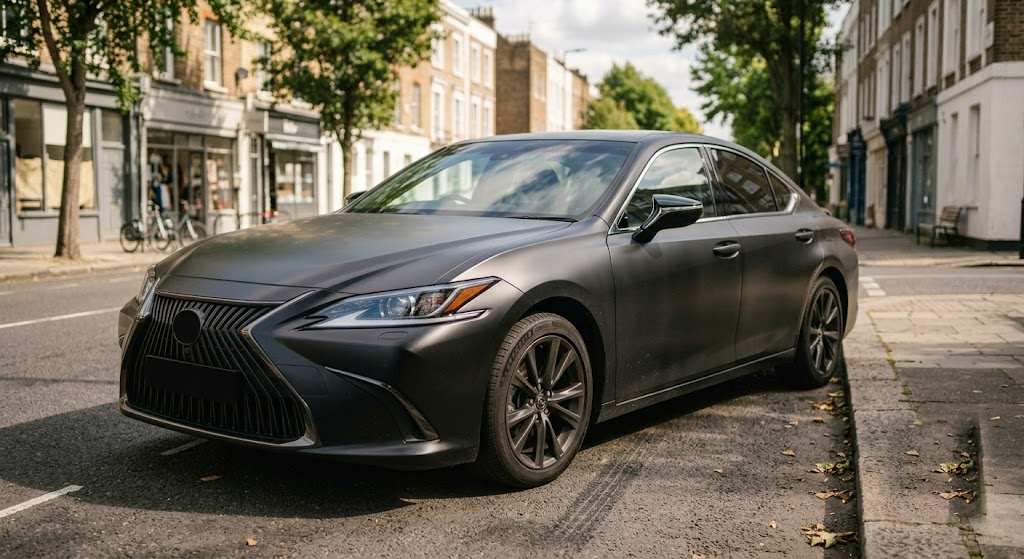
The most immediate read-through of the Sri Lanka story for Indian buyers is about CBU (completely built unit) imports. India's import duty on fully assembled cars already exceeds 100%, and any meaningful rupee depreciation — driven by global risk-off sentiment, a rising dollar, or regional FX contagion — adds directly to a manufacturer's landed cost. That cost is invariably passed on to buyers within a quarter or two, often as a mid-year price revision. The [Lexus ES](/cars/lexus-es) (from ₹64.2 lakh, petrol hybrid, 22.4 kmpl), the [Mercedes-Benz C-Class](/cars/mercedes-benz-c-class) (from ₹60 lakh), and the [Mercedes-Benz E-Class](/cars/mercedes-benz-e-class) (from ₹78.5 lakh) all carry meaningful import cost exposure. If you are in the final stages of deciding on one of these, the case for acting in July rather than deferring to Q4 FY27 is real: the direction of import cost risk is upward, not downward, and a 2–3% rupee move can translate to several lakh rupees on a high-value CBU.
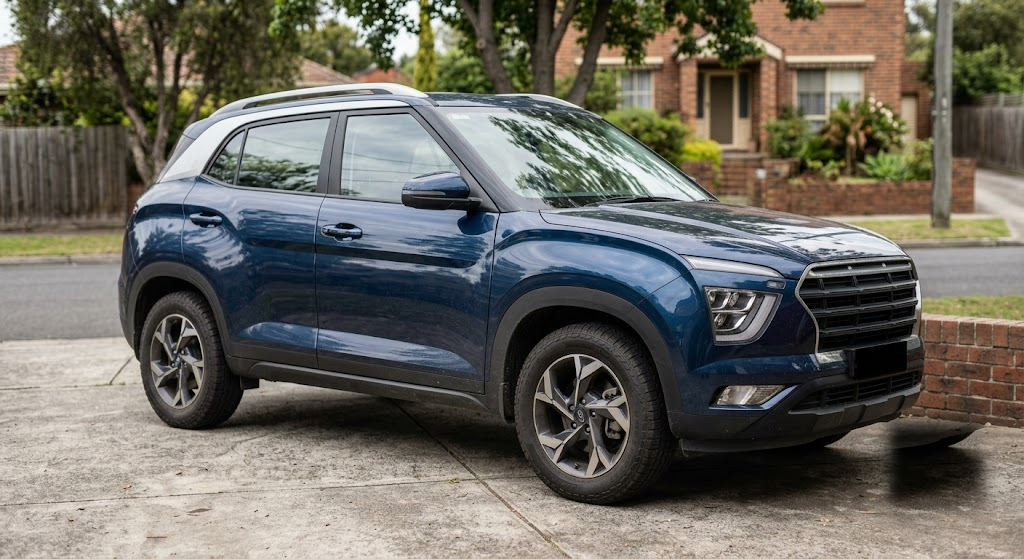
For the majority of Indian buyers financing in the ₹8 lakh–₹25 lakh band, the RBI's repo rate hold at 5.25% is the most directly relevant number. Auto loan rates from major banks are currently running approximately 8.5%–9.5% depending on credit profile — stable and materially below the cycle highs of late 2024. On a ₹14 lakh loan over 60 months at around 9%, the monthly EMI works out to roughly ₹29,000, which is the right ballpark for a well-specified [Hyundai Creta](/cars/hyundai-creta) (from ₹11 lakh, up to 17.4 kmpl), a [Kia Seltos](/cars/kia-seltos) (from ₹10.99 lakh, up to 20.7 kmpl), or a [Mahindra XUV700](/cars/mahindra-xuv700) (from ₹13.99 lakh). The important caveat: with inflation now projected at 5.1%, the MPC has significantly less room to cut further. Rate risk from here is asymmetric — more likely to hold or nudge up than to fall. Buyers who lock in a loan today are securing today's rate, not a hypothetical future one.
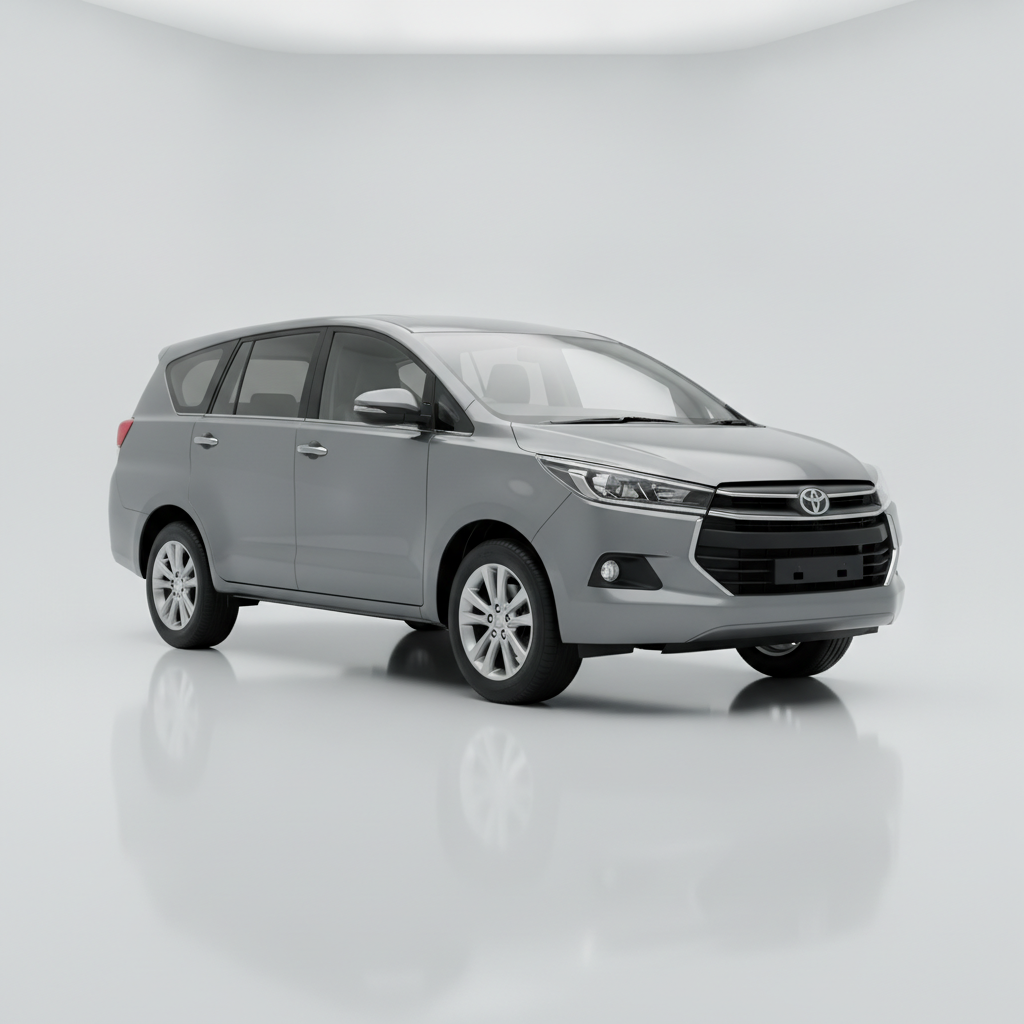
The Hormuz episode is a live argument for fuel efficiency. Petrol prices in India track global crude benchmarks, and a sustained disruption to Middle Eastern oil flows — even a partial one — would push pump prices meaningfully higher across Indian cities. For buyers currently choosing between a standard petrol SUV and a hybrid or alternative-fuel alternative, this is not an abstract scenario. The [Toyota Innova Hycross](/cars/toyota-innova-hycross) Petrol-Hybrid (from ₹19.3 lakh, 21.1 kmpl) delivers substantially better economy than a comparable non-hybrid MUV; the payback on the premium compresses quickly if petrol moves toward ₹110 per litre. At the budget end, the [Maruti Suzuki Baleno](/cars/maruti-suzuki-baleno) CNG variant (from ₹6.65 lakh, petrol rated 22.35 kmpl; CNG running costs lower still) and the [Hyundai Aura](/cars/hyundai-aura) CNG (from ₹6.65 lakh) offer fuel bills that are structurally disconnected from crude volatility. For buyers making a longer-horizon decision, the [Mahindra BE 6](/cars/mahindra-be-6) electric SUV (from ₹18.9 lakh, 490 km ARAI range on the 59 kWh pack) sidesteps the fuel cost question entirely — and is assembled in India, which matters for the next point.
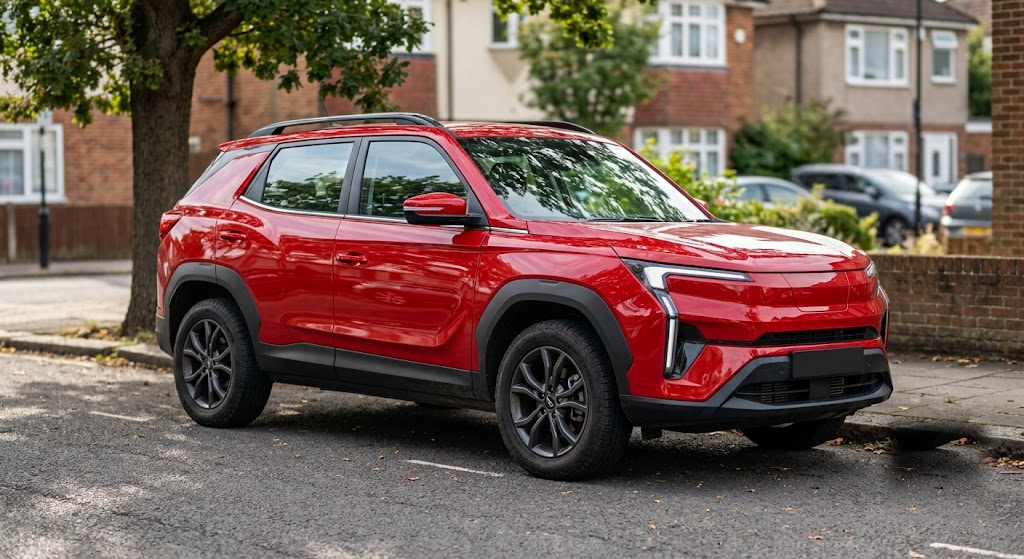
India's passenger vehicle market is projected to grow 4–6% in FY27, a healthy trajectory underpinned by strong local manufacturing investment. That domestic footprint is itself a macro advantage for Indian buyers right now: models assembled in India carry minimal import tariff risk and are far better insulated from rupee swings than their CBU counterparts. Recent global assessments of supply-chain resilience have consistently highlighted India's improving position as a diversified manufacturing hub — and for car buyers, this translates to pricing stability on locally built models. The [Hyundai Creta](/cars/hyundai-creta), [Kia Sonet](/cars/kia-sonet) (from ₹8 lakh), and [Tata Nexon](/cars/tata-nexon) (from ₹8 lakh, available in petrol, diesel, CNG, and electric) are all manufactured domestically and come with pricing that is structurally insulated from the FX and tariff pressures currently squeezing CBU imports. One practical note: with industry momentum running at 4–6%, waiting periods on popular diesel and hybrid variants can stretch to 6–10 weeks. The cost of deferring a booking is real.
The headline for Indian car buyers entering July 2026 is this: the macro window is stable but time-bounded, and the risks are asymmetric in one direction. Rates are on hold, not falling. Fuel costs carry upside risk. Imported vehicles face a tightening FX and tariff environment that Sri Lanka's emergency surcharge has just made vivid. The smart move in this climate is to favour domestically manufactured, fuel-efficient models and to act while EMI rates are still favourable. For luxury buyers eyeing CBU imports, the case for moving in July rather than waiting for Q4 is sharper still. And for every buyer at every price point, the Hormuz episode is a useful reminder that the running-cost column of any car purchase decision deserves the same rigour as the sticker price.