Auto Boom Meets Global Risk: 4 Smart Car Buys for July 2026
India's passenger vehicle market is accelerating just as global supply chains and oil routes face fresh stress—here is exactly what that means for your next car purchase.
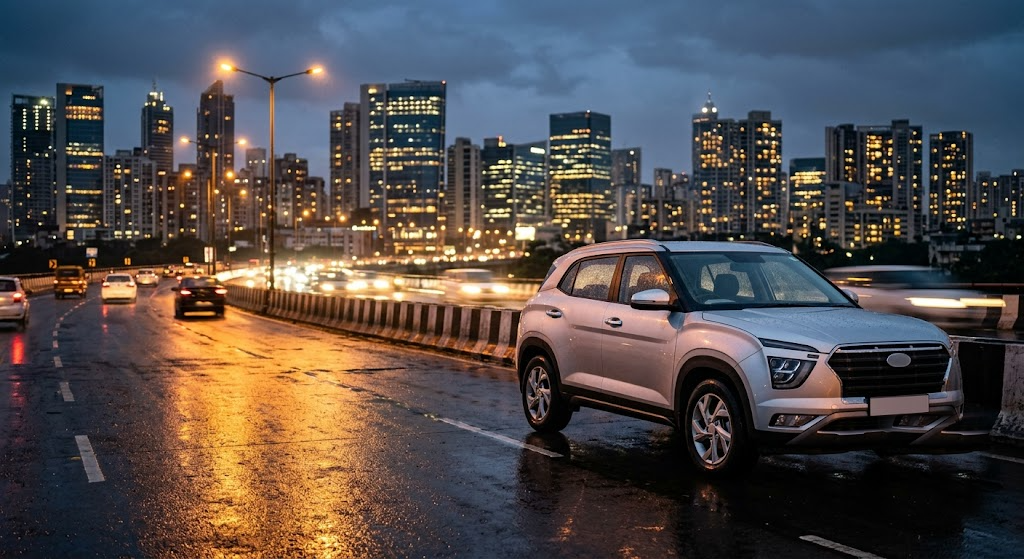
India's passenger vehicle sector entered July 2026 firing on all cylinders — GST collections have risen in tandem with auto sales, and a fresh industry report pegs PV growth at 4 to 6 per cent for FY27, a notable resilience given the turbulence gathering offshore. The Strait of Hormuz, through which a significant share of global crude moves, remains a live tension point following regional escalation in June. UK automotive bodies warned this week that new EU trade barriers are scrambling supply chains for European manufacturers. And the broader narrative of trade-war tariff risk, documented in global supply-chain analyses published in late June, continues to shadow component sourcing from East to West. For an Indian buyer hovering over a purchase decision right now, these crosscurrents are not abstract — they translate directly into on-road prices, waiting periods, and EMI rates.
Start with the most buyer-friendly signal in the mix: the Reserve Bank of India is in no hurry to raise rates. Governor Sanjay Malhotra publicly described rate-hike talk as premature in late June, and the RBI's posture heading into H2 2026 suggests the repo rate — and by extension the 8.5 to 9.5 per cent car loan rates most buyers face at commercial banks — is unlikely to move materially upward before year-end. For someone financing a vehicle in the ₹10–18 lakh range, the difference between borrowing now versus after a hypothetical 50-basis-point hike later translates to roughly ₹500–800 extra per month on a five-year loan. That is a meaningful sum compounded over 60 equated monthly instalments. The window to lock in today's financing is open, and based on the RBI's own signalling, it may not remain so through Q4.
The picture turns more cautious for buyers eyeing imported or heavily import-dependent vehicles. Global supply-chain analysts flagged in late June that invisible disruptions — logistics bottlenecks, rare-earth sourcing gaps, and shipping-lane uncertainty — could widen into real lead-time problems by Q3 2026. More directly, the tariff friction tightening between the UK and EU is hitting European brands that assemble vehicles for export to India or source key components across those borders. Fully-built-unit (CBU) imports like the [Lexus ES](/cars/lexus-es) (from ₹64.20 lakh), the [Mercedes-Benz GLC](/cars/mercedes-benz-glc) (from ₹74 lakh), and the [Porsche Macan](/cars/porsche-macan) (from ₹88 lakh) carry both rupee-dollar exchange risk and the potential cost pass-through of escalating tariffs on components or finished units. Buyers committed to these models should seek a written price-lock from their dealer and factor in a prudent ₹2–4 lakh buffer for currency and logistics movement over the coming months.
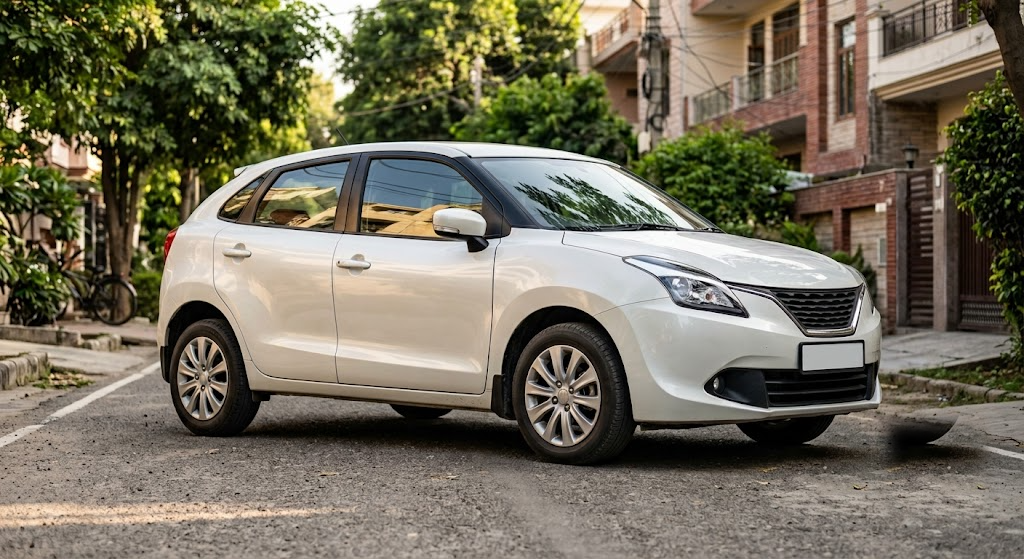
On the energy side, any renewed spike in crude oil — and the Hormuz fault line makes that a genuine tail risk, not a remote scenario — feeds through to Indian pump prices within weeks. This reframes the running-cost calculus and makes high-efficiency vehicles more defensible than usual. The [Toyota Innova Hycross](/cars/toyota-innova-hycross) petrol-hybrid (21.1 kmpl, from ₹19.30 lakh) already delivers near-diesel economy with petrol convenience, and its hybrid system becomes more financially compelling every time pump prices edge upward. At the affordable end, the [Maruti Suzuki Baleno](/cars/maruti-suzuki-baleno) (22.35 kmpl, from ₹6.65 lakh) is one of the most fuel-efficient petrol hatchbacks on sale in India, and it is entirely domestically produced, making it largely immune to the import-cost pressures weighing on European and certain Korean CBUs. For buyers prepared to commit to electric mobility, the [Tata Nexon EV](/cars/tata-nexon-ev) (465 km claimed range, from ₹12.99 lakh) eliminates pump-price exposure altogether.
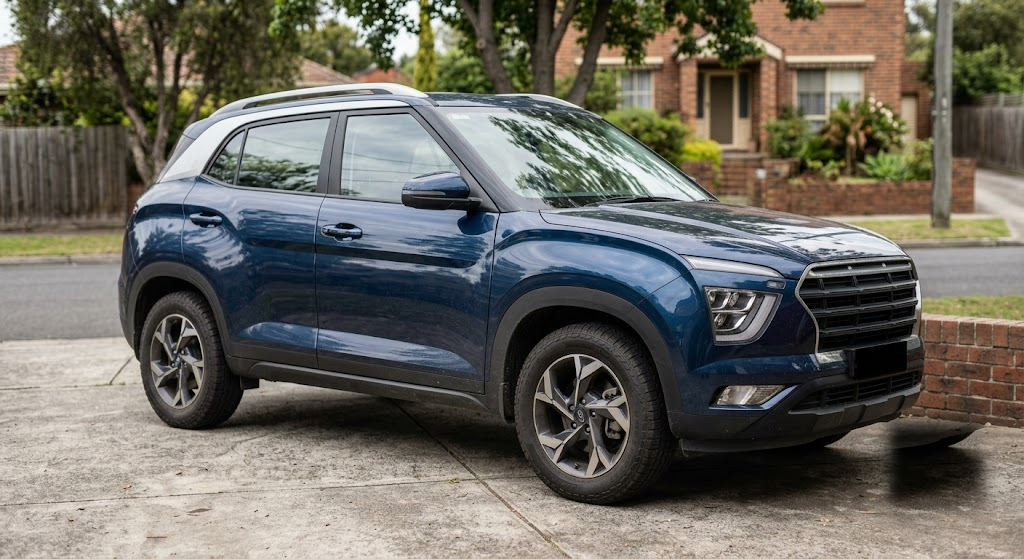
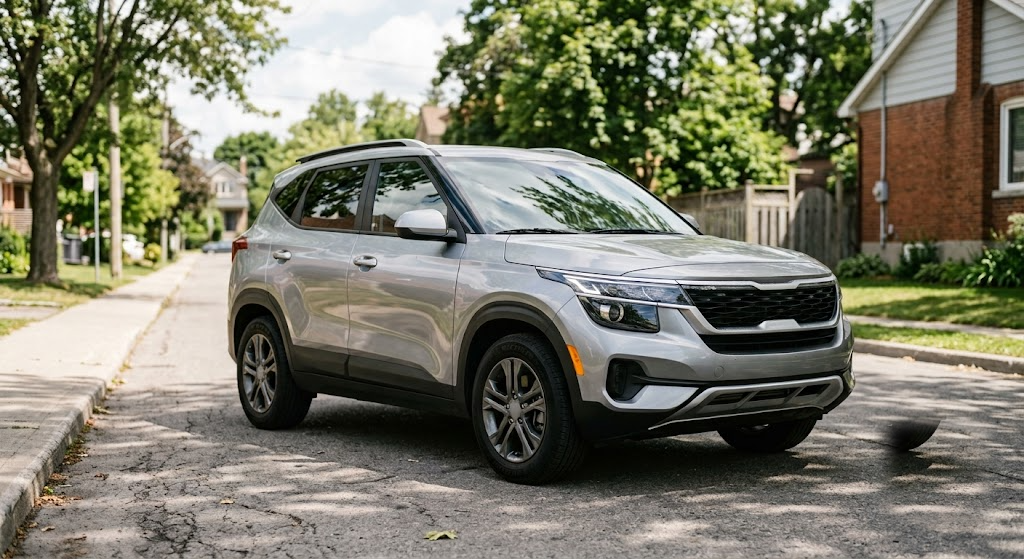
The 4–6 per cent FY27 PV growth forecast is the headline that should drive urgency, not alarm. When the market expands at this clip, popular mid-segment models tend to accumulate waiting periods and attract mid-year price revisions. The [Hyundai Creta](/cars/hyundai-creta) (from ₹11 lakh, 17.4 kmpl) and the [Kia Seltos](/cars/kia-seltos) (from ₹10.99 lakh, up to 20.7 kmpl on diesel) are the canonical examples: both are domestically assembled with high localisation, both sit at the sweet spot of India's fastest-growing SUV segment, and both have historically seen six-to-ten week waits on top trims when demand strengthens. Acting in July — ahead of the post-monsoon demand uptick that typically pushes order queues out from October onwards — is rational for buyers who have already shortlisted these models. The [Hyundai Alcazar](/cars/hyundai-alcazar) (from ₹14.99 lakh, 20.4 kmpl diesel) offers a strong three-row alternative on the same domestically assembled platform, combining competitive efficiency with insulation from the import-cost pressures that complicate the CBU segment.
The practical verdict for July 2026: buy domestic, buy efficient, and move before post-monsoon demand tightens the market. Rates are stable now, major OEMs have not yet issued price-hike notifications for Q3, and stock on locally built models is adequate. If you are evaluating a CBU import, negotiate a written price commitment before signing. If you are undecided between petrol and hybrid, the energy risk premium in the current macro environment tips the argument toward hybrid. And if you have been waiting for a signal that the "right time" has arrived — the convergence of a cooperative RBI, solid-but-not-overheated domestic auto demand, and a pre-recovery buying window is about as close to a green light as India's car market offers in a year when the global backdrop, while not alarming, is unmistakably restless.