What UK Auto Supply Woes Mean for India Car Buyers in July 2026
Global automotive supply chains are under fresh stress — and the SMMT's July warning, combined with RBI's dovish rate stance and surging Indian auto sales, reshapes exactly which cars Indian buyers should target this month.
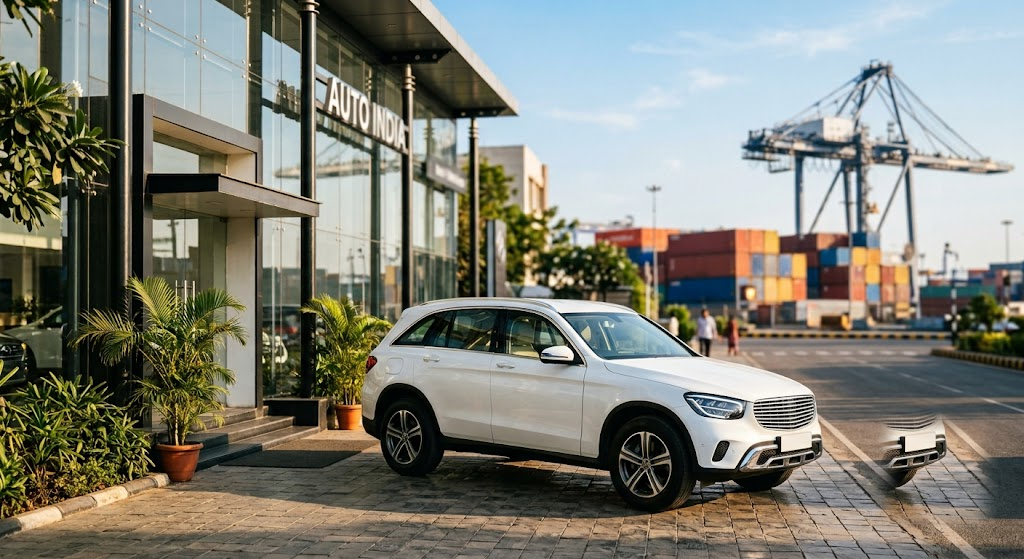
On 3 July 2026, the Society of Motor Manufacturers and Traders (SMMT) — the UK's automotive industry body — flagged significant trade-policy challenges facing global automotive supply chains, a warning that arrives as India's own auto market is running conspicuously hot. GST collections and passenger-vehicle sales data for June 2026 both climbed, confirming that domestic demand remains robust even as the world outside India grows more complicated. Layered onto this is a geopolitical overhang: the Strait of Hormuz, briefly closed last month, is now under an interim US-Iran arrangement, but crude-price volatility has not fully dissipated. Against this backdrop, RBI Governor Sanjay Malhotra has made the central bank's near-term intentions explicit — calling talk of a rate hike "premature." For Indian car buyers, these signals read together do not spell alarm; they point to a specific window of opportunity, with the sharpest risk lying not in the macro outlook but in your particular choice of vehicle and its exposure to international supply-chain stress.
The SMMT alert matters for India because automotive supply chains are deeply interconnected. Semiconductor wafers, advanced driver-assistance sensors, inverter components for hybrids, and battery management chips all flow through the same global logistics networks that UK manufacturers are now flagging. When those chains tighten — whether from trade-policy friction, geopolitical disruption, or logistics bottlenecks — the impact lands unevenly on the Indian showroom floor. Completely Built-Up (CBU) imports, which already carry import duties of approximately 100% for vehicles priced above $40,000, are the most exposed: the [Lexus ES](/cars/lexus-es) (starting ₹64.20 lakh, 22.4 kmpl) and [Kia EV6](/cars/kia-ev6) (from ₹60.97 lakh, 528 km claimed range) fall squarely into this category. Any rupee softening or supply-side cost increase translates almost directly into a price revision for these vehicles. CKD (Completely Knocked Down) vehicles assembled in India — such as the [Mercedes-Benz C-Class](/cars/mercedes-benz-c-class) (from ₹60 lakh) — carry moderately lower exposure because duties apply to parts rather than finished cars, but globally sourced major assemblies still leave them vulnerable. Buyers with deposits ready on these models should weigh carefully whether today's prices hold through Q3.
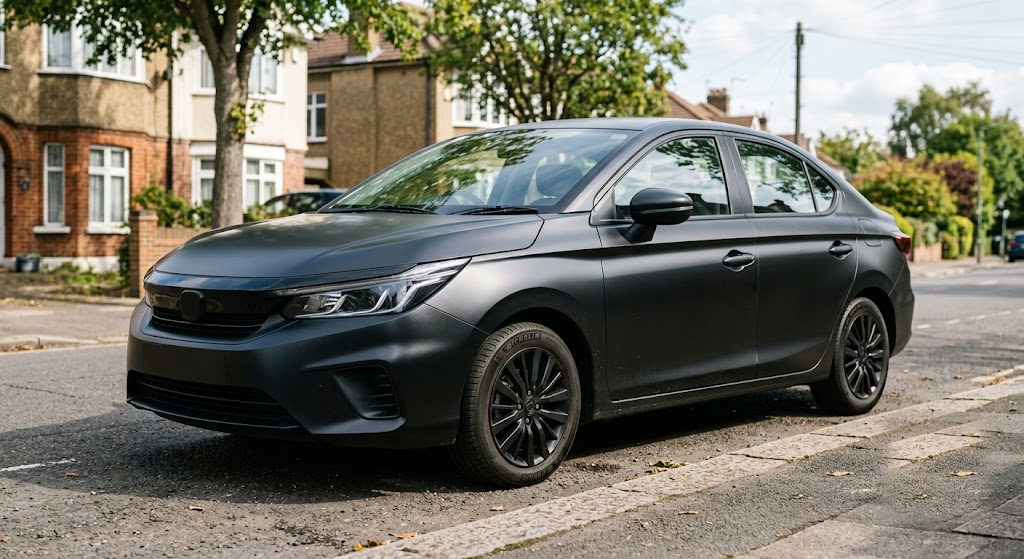
The more reassuring side of the picture is the financing environment. With the RBI explicitly ruling out a rate hike in the near term, bank auto-loan rates are broadly stable — typically in the 8.5%–10% range depending on lender, tenure, and credit profile. On a ₹12 lakh loan spread over five years, that works out to an EMI of roughly ₹24,500–₹26,000 per month — the most predictable it has been in over a year. This rate stability matters most in the mid-market band of ₹10 lakh to ₹18 lakh, where EMI affordability is usually the primary purchase trigger. The [Honda City](/cars/honda-city) (from ₹11.90 lakh, 18.4 kmpl petrol or hybrid) and [Hyundai Verna](/cars/hyundai-verna) (from ₹11 lakh, 20.6 kmpl) are two particularly well-timed buys in this context: both are locally assembled, both have established India-rooted supply chains that limit their exposure to global component disruption, and both sit in segments where showroom inventory is still comfortable. A buyer who locks in an EMI at current rates and takes delivery within the next 30 to 60 days is in as strong a position as the market has offered all year.
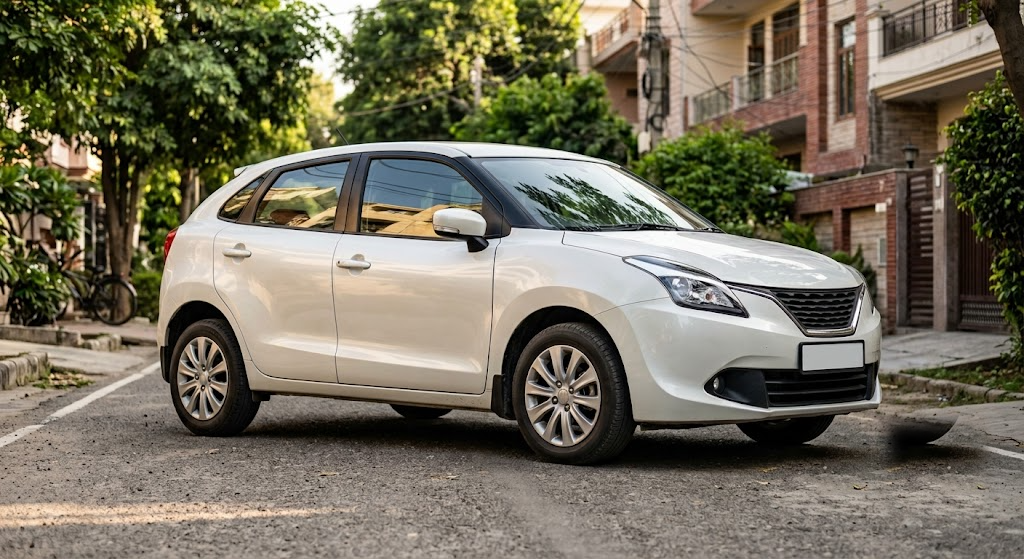
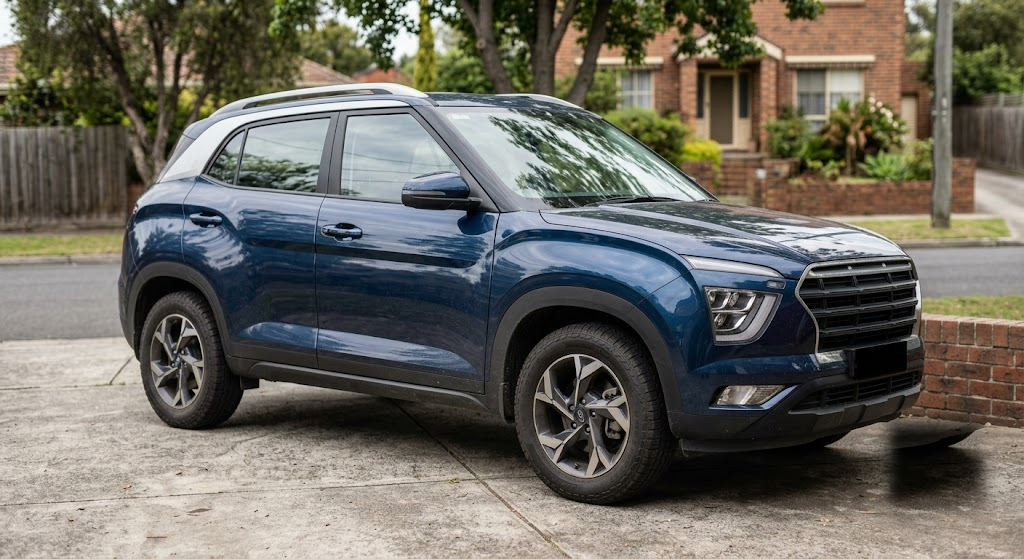
For buyers working with budgets under ₹15 lakh, the current environment points decisively toward highly indigenised, locally manufactured vehicles. The [Maruti Suzuki Baleno](/cars/maruti-suzuki-baleno) (from ₹6.65 lakh, 22.35 kmpl) is the standout value case: Maruti Suzuki has one of the deepest local-sourcing networks of any automaker in India, meaning global supply-chain disruptions translate into minimal ex-factory price pressure. At a rough fuel cost of around ₹3.30 per kilometre at current petrol prices, its running costs are among the lowest in any segment. The [Hyundai Creta](/cars/hyundai-creta) (from ₹11 lakh, 17.4 kmpl petrol) remains the category leader and is manufactured in Sriperumbudur with a well-established local supply network; the [Kia Seltos](/cars/kia-seltos) (from ₹10.99 lakh, up to 20.7 kmpl diesel) shares a sister platform and comparable supply-chain insulation from its Anantapur plant. Both are in strong enough demand that waiting periods could extend if any supply constraint emerges — buyers who are ready should move rather than hold out for a marginal discount. The [Mahindra XUV700](/cars/mahindra-xuv700) (from ₹13.99 lakh, 16.5 kmpl) adds a homegrown-brand premium: Mahindra's aggressive localisation roadmap makes it arguably the least exposed mainstream SUV to the international supply turbulence that SMMT is warning about.
The hybrid and EV segments require a more nuanced read. With oil-price uncertainty lingering — the Strait of Hormuz may be open today, but the structural risk it represents has not been resolved — vehicles that reduce fuel dependence carry a genuine long-run cost hedge. The [Toyota Innova Hycross](/cars/toyota-innova-hycross) (from ₹19.30 lakh, 21.1 kmpl) is the clearest illustration: assembled in India from CKD kits, its strong-hybrid system delivers petrol-equivalent running costs of roughly ₹3.10 per kilometre even at current pump prices, and its proven resale value adds a further buffer against broader economic uncertainty. For pure EVs, the choice between domestic and imported carries real consequences in this environment. The [Mahindra BE 6](/cars/mahindra-be-6) (from ₹18.90 lakh, 490 km ARAI range on 59 kWh) and [Tata Nexon EV](/cars/tata-nexon-ev) (from ₹12.99 lakh, 465 km MIDC claimed) are both locally manufactured with progressively localised battery supply chains, making them far more insulated from global component disruption than any imported EV at a comparable price point. If you are weighing an electric vehicle where your budget spans both domestic and imported options, the locally built choice is the more defensible one in the current global trade climate.
The practical takeaway for July 2026 is neither panic nor complacency — it is precision. India's auto market is growing, the RBI is not about to tighten your loan, and GST data confirms that consumer spending is healthy. What the SMMT warning and wider global supply-chain reports tell you is that the risk is not systemic — it is specific to where a given vehicle sits in the global trade network. Locally assembled, highly indigenised vehicles from Maruti, Hyundai, Kia, Mahindra, and Toyota's India operations are structurally well-positioned for the second half of 2026. CBU imports and models with high international component dependence carry more price-revision risk, and that risk is directional rather than temporary. If you are in the market this month, prioritise vehicles you can take delivery of within four to six weeks, lock in the current EMI environment before any forward guidance shifts, and factor running costs — fuel efficiency or electric range — into your total cost of ownership rather than focusing only on the sticker price. The buyers who act with clear-eyed precision right now are the ones who will look smart when supply-chain headlines hit closer to home later in the year.