6.8% GDP & RBI Holds: The 2026 Car Loan Window Explained
A rare triple tailwind — GDP upgraded to 6.8%, the RBI anchoring rates, and crude pulling back — is quietly reshaping the car loan math for Indian buyers across every budget in 2026.

Goldman Sachs raised India's GDP growth forecast to 6.8% for FY27 on 26 June, citing the rapid fade of what had been a significant global oil-price shock — itself partly defused by an interim US-Iran peace arrangement that helped pull crude off its 2026 highs. Days earlier, RBI Governor Sanjay Malhotra had publicly called rate-hike talk "premature," reaffirming that the central bank's priority remains supporting growth rather than tightening policy. These two signals — stronger-than-expected GDP momentum and a visible commitment to rate stability — land simultaneously for Indian car buyers at a moment when auto demand is already riding a strong wave. Taken together, they create a financing environment that has rarely been this buyer-friendly.
The direct translation to the showroom floor runs through your car loan. When the RBI anchors the repo rate and the governor rules out near-term hikes, bank and NBFC lending benchmarks follow. Auto loans for salaried buyers currently sit in approximately the 8.5-9.5% range (varying by lender and credit profile), and that range is unlikely to climb given the governor's explicit signal. On a ₹10 lakh principal over 60 months at roughly 8.75%, the monthly EMI works out to approximately ₹20,700 — a figure that could ease further if rates nudge down. Meanwhile, softer crude filters into petrol and diesel pump prices with a lag; every ₹3-4 per litre drop cuts roughly ₹360-480 from a typical monthly fuel bill for a buyer covering around 1,200 km. Lower EMI risk combined with lower running costs is a double tailwind that does not appear together often.
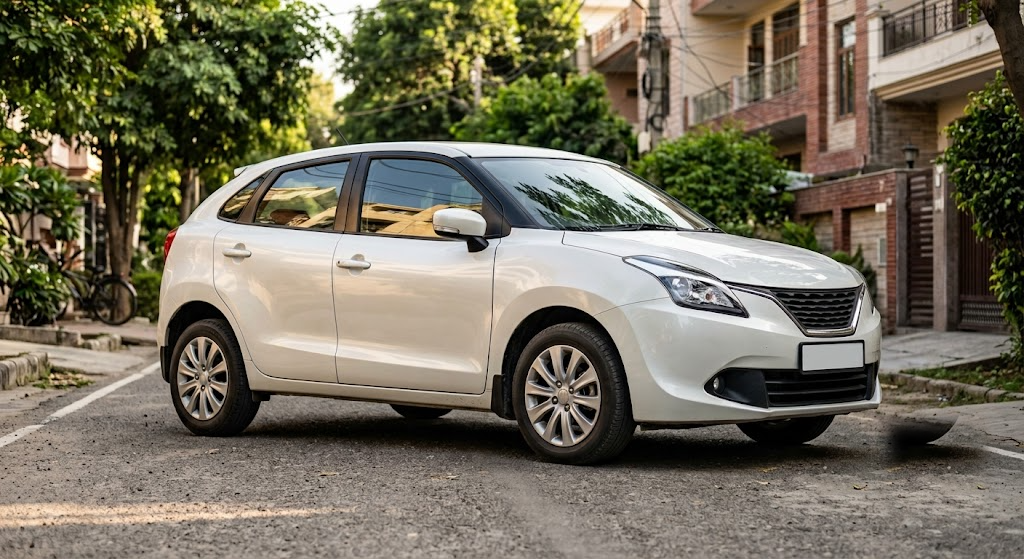
In the sub-₹10 lakh segment, these tailwinds are most tangible. The [Maruti Suzuki Baleno](/cars/maruti-suzuki-baleno) (from ₹6.65 lakh, 22.35 kmpl) sits at the top of the efficiency league in its class — at easing petrol prices, its low consumption amplifies into real monthly savings faster than almost any rival. The [Tata Nexon](/cars/tata-nexon) (from ₹8 lakh) adds diesel and CNG variants to a 17.4 kmpl petrol option, giving buyers a natural hedge against fuel volatility; the diesel Nexon at 23.2 kmpl is among the cheapest cars to run in its segment. The [Hyundai Exter](/cars/hyundai-exter) (from ₹6 lakh, 19.4 kmpl, also available in CNG) and [Tata Punch](/cars/tata-punch) (from ₹6 lakh, 20.1 kmpl with CNG option) complete a group where the combination of stable EMIs and efficient powertrains makes the full ownership math genuinely compelling right now.
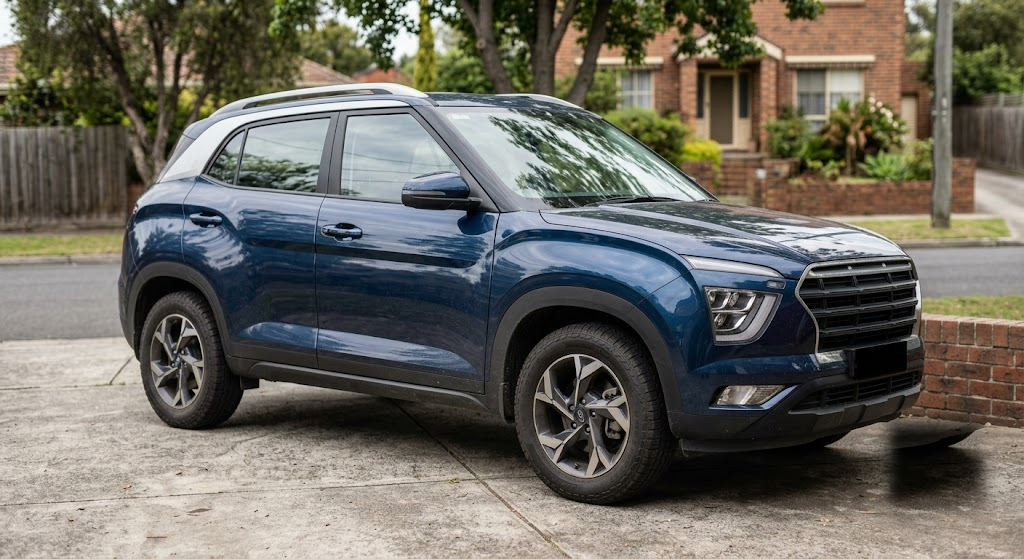
Step up to the ₹11-30 lakh bracket and the GDP story adds a second dimension: rising household incomes support stretching one rung higher with confidence. The [Hyundai Creta](/cars/hyundai-creta) (from ₹11 lakh, 17.4 kmpl) and [Kia Seltos](/cars/kia-seltos) (from ₹10.99 lakh, up to 20.7 kmpl diesel) are the volume choices here, with 5-year EMIs sitting in a manageable ₹22,000-24,000 band for most mid-variant configurations at current rates. For seven-seat families, the [Kia Carens](/cars/kia-carens) (from ₹11 lakh, diesel up to 21.3 kmpl) is hard to fault on value per seat. The standout upgrade in the range is the [Toyota Innova Hycross](/cars/toyota-innova-hycross) (from ₹19.3 lakh, 21.1 kmpl petrol-hybrid): its strong-hybrid system pushes per-kilometre running cost well below ₹5 at current petrol prices, turning the price premium over a conventional MPV into a rational long-run saving over a five-year ownership cycle.
The premium segment carries its own macro subplot. India's trade pact with the UK grants concessional import duties on up to 3.78 lakh British-origin vehicles over the first 15 years of the agreement — and the [Mini Cooper](/cars/mini-cooper) (currently from ₹44.9 lakh), assembled in Oxford, England, is among the most directly eligible models in the Indian market catalogue. Duty relief will phase in gradually via annual quotas rather than arriving as an immediate price cut, so buyers who can wait 6-12 months may see pricing inch lower meaningfully. European marques such as the [Mercedes-Benz C-Class](/cars/mercedes-benz-c-class) (from ₹60 lakh) and [Volvo XC60](/cars/volvo-xc60) (from ₹67.9 lakh) are German and Swedish-origin respectively and fall outside the UK quota, though ongoing EU-US tariff tensions are already pushing European carmakers to sharpen their pricing in strong-demand export markets like India — a dynamic that may benefit premium buyers indirectly over the next 12-18 months. For those acting today in the premium space, the [Lexus ES](/cars/lexus-es) (from ₹64.2 lakh, 22.4 kmpl petrol-hybrid) stands out: its hybrid efficiency advantage over comparably priced European diesel sedans widens as fuel costs ease, strengthening its total cost-of-ownership case.
The practical read for Indian car buyers in late June 2026 is straightforward: act on the window, but stay calibrated. The GDP upgrade, rate hold, and fuel-cost easing are a rare convergence of favourable signals — none of which is permanent. The RBI governor's "premature" language on rate hikes is a green light for now, not a standing commitment; a food-inflation spike from an uneven monsoon or a fresh geopolitical oil shock could shift the calculus within a quarter or two. Buyers considering a Baleno, a Nexon, a Creta, or an Innova Hycross would be prudent to lock in a loan at today's conditions rather than waiting for something incrementally better that may not materialise. Those eyeing the Mini Cooper or other UK-origin premium models have a reasonable case for a patient 6-12 month wait to see quota pricing take hold. In every segment, the current fuel-cost environment argues firmly for high-efficiency variants — hybrid, diesel, or CNG — because the next swing at the pump could go either direction.